


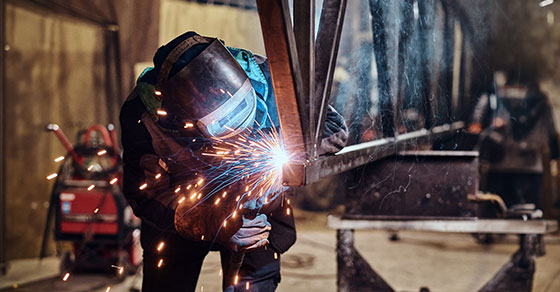
Expectations around metal fabrication have shifted in recent years as speed is no longer enough. Projects now demand accuracy, durability, and consistency from the start. This pressure has pushed fabrication forward through real operational needs.
Buyers are looking for components that perform reliably in demanding environments and integrate seamlessly into existing systems. As a result, metal fabrication continues to evolve in practical ways.
What’s driving change in metal fabrication today?
Across industrial projects, higher standards are now expected. It is common knowledge that fabricated components must align with existing structures or equipment. Even small deviations can lead to installation delays or on-site adjustments. At the same time, turnaround times are shrinking. Projects move faster, and waiting for rework is rarely an option.
Complexity has also increased. Components are no longer seen as standalone pieces. Instead, they form part of larger systems where accuracy and fit directly affect performance. This shift has placed enormous pressure on industrial metal fabrication to deliver consistent results from the start.
In essence, fabrication is now judged by performance, reliability, and integration. Below are the top five innovations taking place today.
1. Laser technology (cutting and welding)
Laser cutting and laser welding have introduced a higher level of precision into metal fabrication. Traditional cutting methods can leave rough edges or require additional finishing. Laser technology, on the other hand, produces cleaner cuts with minimal distortion. This becomes very important when components must align precisely during installation.
In welding, laser processes provide controlled heat input. This reduces the risk of warping for thinner materials. For projects that prioritize appearance and structural integrity, laser welding control makes a difference. Joints are stronger, and consistent welds can be easily spread across multiple parts.
For instance, consider a fabrication job that involves detailed panels or structural brackets. Clean edges minimize the need for secondary work, while consistent welds improve durability. Laser-based methods support both outcomes.
2. CNC machines and precision automation
CNC machines have now become a core part of modern industrial metal fabrication, primarily because they deliver “repeatable accuracy.” Manual processes depend heavily on operator skill, which can vary from one job to another. CNC systems remove many of those variations by following programmed instructions with high precision.
This consistency is valuable when producing multiple components that must match exactly. Once a program is set, the same part can be reproduced with minimal deviation, thus limiting errors and aiding a better fit during assembly.
Precision automation also allows for tougher designs. Shapes that would be difficult to produce manually can now be executed reliably through CNC processes. This includes detailed cutouts, bends, and formed parts. Through improved accuracy and reduction in engineer dependency or manual adjustments, CNC technology supports predictable fabrication outcomes.
3. Robotic welding automation
All project managers know that welding is important to achieve structural integrity, alongside consistency. Robotic welding automation addresses this by delivering uniform welds across repeated tasks. In manual welding, variations can happen due to fatigue, positioning, or environmental conditions. Robotic systems halt such inconsistencies through steady movement and controlled parameters.
Another advantage is efficiency. Robotic automations can operate continuously with minimal interruption. This is always leveraged to increase output without compromising quality. While skilled workers remain essential for setup and supervision, automation supports productivity where repetition is required.
Within metal fabrication, robotic welding contributes to stronger and more consistent results quickly and efficiently.
4. Advanced materials and alloys
Material selection has become more deliberate. Different environments place unique demands on components, and not all metals perform the same way. Advanced materials and alloys allow fabricators to match material properties with specific operational needs.
For example:
- Stainless steel is usually used where corrosion resistance is needed, such as in moisture-heavy or chemical environments.
- Galvanized steel provides durability in outdoor conditions (areas with constant exposure to weather).
- Aluminum offers strength while reducing weight. It is suitable for applications that prioritize load and transport.
Custom metal fabrication helps ensure these materials are handled correctly. Each metal responds differently to cutting, forming, and welding processes. Adjusting fabrication techniques based on the materials helps maintain structural integrity and performance.
Choosing the right material, combined with proper handling during fabrication, supports longer-lasting components that perform reliably.
5. Additive manufacturing, digitalization, and rapid prototyping
Digital tools and additive manufacturing have introduced new ways to approach fabrication, particularly in early-stage development.
Rapid prototyping allows fabricators to create sample parts quickly. This way, it becomes easier to test fit, function, and design before full production begins.
Additive manufacturing, commonly known as 3D printing, supports the creation of complex shapes that may be difficult to achieve through traditional methods. While not always used for full-scale production in heavy industry settings, it plays a valuable role in design validation and small-batch components.
Digitalization also improves planning. Software tools help map out fabrication steps, identify potential issues, and refine designs before materials are cut.
Together, these innovative technologies are very useful during custom metal fabrication projects. They support faster development cycles and ensure that final components meet operational requirements from the start.
Why These Innovations Matter for Industrial Applications
Each of these innovations addresses a specific challenge faced in industrial environments.
- Precision reduces installation delays.
- Automation improves consistency.
- Advanced materials extend component life.
- Digital tools support better planning and fewer errors.
In tandem, these improvements lead to more predictable outcomes. Projects move forward with fewer interruptions, and components perform as expected once installed. This is critical for industries that can be affected by downtime, where short disruptions can impact production schedules.
Remember, industrial metal fabrications continue to evolve because these results are now expected. As expectations increase, fabrication processes must continue to adapt to meet them.
Nu-Tech Metals’ Solutions Are Built for Modern Performance
At Nu-Tech Metals, fabrication is carried out across steel, galvanized steel, stainless steel, aluminum, copper, and brass products. All materials are handled to match their specific application. We use advanced technologies like laser cutting to ensure clear edges, and CNC equipment for consistent, repeatable production across components. From prototypes to full production runs, we approach custom metal fabrication with a focus on strength, fit, and reliability in working conditions.
Execution extends beyond fabrication. Projects move from planning through building with site setup under one coordinated process. Our fabricators, welders, and installers manage each stage directly to achieve premium client satisfaction.
For teams planning upcoming projects or looking to improve fabrication outcomes, Nu-Tech Metals offers the experience and capability to deliver reliable results. Call us at +1 807-798-1127 or contact us online to get started.

