


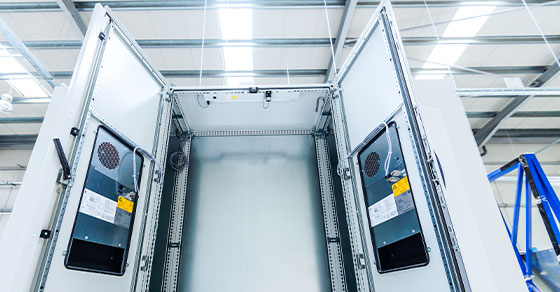
Northern industrial sites face conditions that can wear equipment down quickly. For instance, a conveyor running near a grain elevator may face constant dust buildup, while mining facilities that operate through freezing winters place continuous stress on electrical and mechanical systems.
As operations continue to expand into remote and high-demand environments across Canada, modular steel enclosures have become the go-to choice. They offer practical ways to protect critical systems, ensure safe access, and leave room for future modifications without major disruption.
How the Environment Affects Equipment Lifespan
Heavy industrial equipment is built for demanding workloads. However, surrounding conditions still influence how long systems remain reliable. Fine airborne dust can gradually enter motors, conveyors, electrical panels, and processing systems. Once buildup begins, airflow can become restricted, moving components may wear faster, and the risk of overheating tends to increase during daily operations.
Cold weather creates another layer of concern. Snow accumulation, moisture exposure, and repeated freeze-thaw cycles often affect seals, structural connections, and exposed equipment surfaces over time. Facilities operating near Northern Ontario mines, mills, and bulk handling sites frequently experience these conditions for months at a stretch.
Remote operations are also a major challenge during downtime, making recovery harder. Delayed repairs, limited access for replacement, and difficult winter service conditions make equipment protection a part of long-term operational planning. This is one reason many facilities invest heavily in well-built industrial enclosures for critical systems.
Why Modular Steel Enclosures Are Replacing Traditional Options
Large industrial sites rarely stay unchanged for long. Production lines expand, equipment layouts shift, and additional systems are often added years after initial installation. Traditional fixed structures can make those adjustments difficult when work activities need to continue running during upgrades or maintenance.
- Modular systems offer a more flexible approach. Instead of relying on fully permanent structures that are harder to modify, modular enclosures can be transported in sections, installed faster, and adjusted as site requirements change. This is very useful for mining operations and mill facilities in remote areas where transporting oversized structures poses logistical challenges.
- Maintenance access is another reason modular systems continue gaining attention. Workers may need quick entry to inspect motors, conveyors, dust collection systems, or electrical components without shutting down large surrounding areas. Well-planned equipment enclosures provide easier access and protect equipment from dust, debris, wind, and weather.
For operations that balance uptime, maintenance scheduling, and future growth, modular industrial enclosures impose fewer limitations than older fixed structures.
What Makes an Enclosure Reliable in Northern Industrial Conditions
Site managers know for certain that not every enclosure performs well in the northern industrial environment. Conditions around mines, grain-handling facilities, and heavy processing operations demand more than simple weather coverage. Top enclosure performance usually depends on how well the steel fabrication structure withstands constant exposure and daily work stress.
- Steel strength is important because many industrial sites handle vibration equipment, moving material systems, and harsh weather conditions year-round. Well-built equipment enclosures must withstand wind, airborne debris, moisture exposure, and work operations without weakening.
- Temperature control also becomes a priority in colder regions. Condensation may develop when warm interior air meets freezing outdoor temperatures, particularly around electrical or processing equipment. If installed correctly and airflow is planned accurately, industrial enclosures will reduce moisture-related problems.
- Access planning is factored in. Maintenance crews need sufficient space to inspect systems, replace components, and complete repairs safely in winter conditions. Reliable industrial enclosures are built to protect equipment without making routine servicing harder.
The sturdiness of the steel fabrication also supports long-term durability, enabling extended operating hours.
Where Modular Enclosures Deliver the Most Value
Modular industrial enclosures are commonly used where operational reliability directly affects production schedules and maintenance costs.
- Mining operations frequently protect conveyor systems, dust-collection equipment, and electrical controls from airborne particles and severe winter conditions. Around pulp and paper mills, enclosed systems minimize exposure to moisture, debris, and temperature fluctuations that could affect the performance of sensitive equipment.
- Grain elevators and bulk material-handling facilities also benefit from modular protection systems because grain dust can easily spread through active processing areas. If placed appropriately, equipment enclosures isolate systems and maintain access for maintenance during active periods.
- Manufacturing and processing plants use modular structures around HVAC systems, processing equipment, and control panels. In many cases, the enclosure becomes part of a broader solution that aims to reduce downtime and support long-term reliability.
What Buyers Should Consider Before Choosing Industrial Enclosures
Industrial enclosure requirements vary from one facility to another. Conditions inside a grain-handling operation may differ completely from those inside a mining or processing environment. This is why enclosure planning should begin with actual site conditions and not standardized assumptions.
- Exposure level is one of the first considerations. Facilities dealing with heavy dust, moisture, vibration, or freezing temperatures need unique enclosure features compared to operations in controlled indoor environments.
- Equipment access is equally important because maintenance teams still need safe entry for checkups, repairs, and component replacement.
- Transportation and installation limitations should be reviewed early. This is a priority for remote Northern Ontario locations because oversized structures usually prove harder to deliver. Future expansion plans should be mapped well, as operations can add or modify systems as time proceeds.
Industrial buyers also evaluate how industrial enclosures will integrate alongside dust-collection systems, industrial HVAC equipment, and surrounding processing operations.
Nu-Tech Metals’ Enclosures Are Built for Winter Conditions, Heavy Industries, and Remote Canadian Sites
Based in Thunder Bay, Nu-Tech Metals Ltd. supports industrial enclosure operations across Eastern and Western Canada with strong steel fabrication solutions built for demanding environments. Our team works with industries that prioritize equipment protection, structural durability, and reliable installation. This includes mining, grain handling, manufacturing, processing, and heavy industrial operations.
Many of the projects we take on involve conditions that challenge standard fabrication work. Remote access, winter exposure, vibration-heavy equipment, and large operational needs are common at job sites across Northern Ontario. Nu-Tech Metals provides custom sheet metal systems, dust-collection solutions, industrial HVAC systems, and related fabrication work designed around real environmental conditions.
We also support complex steel building projects for industrial and remote environments. Reach out today at +1 807-798-1127 or contact us online. Our team of expert fabricators is trusted by industrial clients across Ontario and beyond.

