


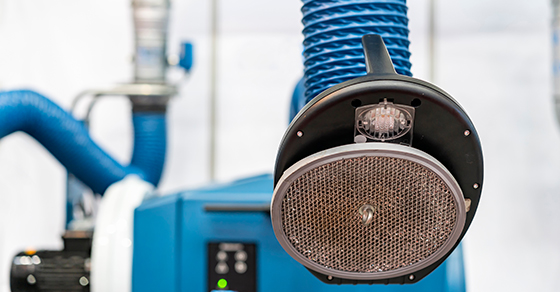
In Northern Ontario, mines, mills, and grain elevators emit dust particles that place significant strain on dust collection equipment. These elevators run shifts every day and generate particles. Over time, the already installed industrial dust collection system can begin to fail, especially as production ramps up. This decline is not always noticeable at first and then can suddenly fail.
However, some of these issues are very noticeable, such as a dust collection system failing to clear airflow properly. Other problems can creep in and manifest slowly, like a filter that needs to be changed more times than it needs to be.
Below, we cover the most important questions:
- Why is an upgrade necessary for any facility’s dust collection system?
- When should a factory manager make the call to upgrade?
- What are the six signs the facility’s current setup is not meeting the standard?
- Should the whole system be changed or only parts of it?
Why upgrade?
- Equipment lifespan: An underperforming dust collection system does a poor job of clearing the air circulating through the factory space. The particles that escape the cleansing go on to settle in between the motor and bearing parts and wear down these pieces of equipment. This can be an issue with facilities that work with combustible materials like grain elevators.
- Overall maintenance cost: Pieces of equipment that gather up dust particles frequently shorten their maintenance intervals. This means an increase in maintenance cost over a long period. The energy cost will also rise due to increased friction and airflow restriction inside the equipment.
- Regulatory standard: Systems with faulty ductwork and worn filters reduce the quality of air in the workplace, which can affect the health and safety of the operators.
When should a dust collection system be upgraded?
Knowing when to make an upgrade is also an important consideration. If a factory waits too long to make a change, the system can suddenly shut down, causing extended downtime and unplanned repair bills. Proper planning involves scheduling upgrades during an already existing maintenance shutdown instead.
Now, how should facilities decide when to make an upgrade? Usually that would be before the small issues compound into a larger problem. For instance, an organization may scale up and add new equipment. It may expand operations or begin processing materials with different properties. These changes often mean the existing setup needs to be reviewed. Some parts may require adjustment. In other cases, the entire system may need to be upgraded. It is imperative that routine inspections be carried out at specific intervals instead of waiting for something to go visibly wrong.
6 Signs That Show It’s Time for a System Upgrade
- Rise in energy costs for no apparent reason: Is there an increase in power to move the same amount of air in the facility? If so, it is usually a sign that the dust collector is aged or undersized to maintain the current factory production.
- Changing filters more often than needed: Filters that load up faster than maintenance interval schedules can do so because the system is undersized, there is a cleaning cycle that is not effective in clearing the filter, or the wrong filter type is being used for the equipment. These can drive up costs and eat into maintenance time.
- Dust escaping the capture area: Dust settling on equipment, floors, and surfaces is a clear sign that the industrial dust collector setup is not doing its work as efficiently.
- Maintenance interval reduction: As a system begins to near the end of its service life, repairs increase in intensity and frequency. If the operators have to spend so much time overall on fixing equipment, then that signals a major upgrade, which is cheaper in the long run.
- Combustible dust non-compliance: Facilities that handle combustible materials, like mining sites or grain elevators, should have modern explosion isolation valves or appropriate venting. If, during routine checks, it is discovered that these systems do not meet the standard, then an upgrade is necessary.
- Production scale is outgrowing currently installed systems: Facilities will upscale, and products will change. However, if the current industrial dust collection setup does not follow the upgrade trend, then it is only a matter of time for a major failure to occur. A system designed for small-scale operations will struggle under larger operations, no matter how well maintained it is.
Full Replacement vs. Partial Replacement
In some of the signs mentioned above, only a specific part needs to be upgraded without replacing the whole system, while for others, the solution lies in a full system overhaul.
Partial replacement is often the right choice when the core parts of the system are still functioning properly and efficiently. In such cases, only certain components are underperforming, faulty, or nearing the end of their lifespan. This could include parts such as a filter or blower that is no longer working as intended.
A full replacement is the better option when the system can no longer meet current operational demands. It is also recommended when several components fail simultaneously or when critical, non-replaceable parts are nearing the end of their service life. In these situations, replacing the entire system is often the most efficient solution. It can also reduce long-term maintenance and repair costs.
Whether it is replacing select parts or reinstalling a fully upgraded alternative, age is not the only factor to consider. Look at how the current system is faring and what continuous repairs will cost you overall.
Why Nu-Tech Metals Is the Partner to Call for This Upgrade
Nu-Tech Metals has worked with industries across Ontario and beyond, including the mines, mills, and grain elevators that make up a good portion of Northern Ontario’s industrial sector. Our shop and mobile crew in Thunder Bay handle sheet fabrication, industrial HVAC, and dust collection work for facilities that cannot afford guesswork or long downtimes.
We are experts in industrial dust collection services, fabricated ducts, and filtration components, and we know how to match new equipment to the existing setup.
If any of these signs look familiar, do not wait until an unscheduled breakdown. Talk to us today at +1 807-798-1127 or contact us online. Schedule your upgrade with our knowledgeable team today!

