


Production and manufacturing factories create many kinds of airborne waste, and each requires different solutions. Dust collection and fume extraction handle different kinds of airborne waste, but people sometimes confuse them. Knowing the difference matters when planning air quality control for a facility.
Understanding when to use each helps keep operations safe and running smoothly in factories in Thunder Bay and across Northern Ontario.
What is dust collection?
Dust collection is an air filtration process that captures, filters, and removes large, heavy airborne waste created through techniques like cutting, grinding, and sanding. Dust collection systems consisting of hoods, ductwork, and a centralized collector are positioned to capture and separate airborne waste from clean air that is then returned to the facility or discharged outside.
Dust collection systems are vital to many manufacturing industries, especially where sheet metal fabrication, material handling, or grinding operations generate airborne waste throughout the day.
What is fume extraction?
Fume extraction is an air filtration process that targets a different kind of airborne contaminant. These contaminants include air wastes like gases, fine smoke, and ultra-fine particles created by heat-intensive operations such as laser cutting, welding, and plasma cutting.
Due to the microscopic nature of fume particles, they remain suspended in the atmosphere longer than dust and can travel far beyond the immediate work area. This is the reason fume extraction equipment is built.
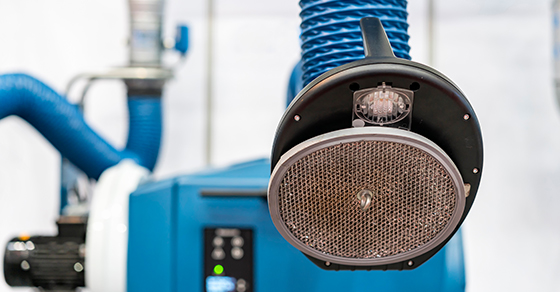
Fume extracting systems are built to capture fume particles close to the source, before they have a chance to spread. A downdraft table pulling fumes away from below the work surface, an extraction arm positioned over a welding station, and a portable fume extractor are all examples of fume extractors.
In industries dealing with a mix of cutting, welding, and fabrication work, fume extraction is usually paired with larger industrial ventilation to maintain and manage overall air quality.
Key Differences Between Dust Collection and Fume Extraction
| Dust Collection | Fume Extraction | |
| Particle Characteristics | Deals with heavier and coarser particles that settle quickly. | Deals with extremely fine and fast-spreading particles. |
| Operational Differences | Mostly centralized systems serving an entire production or manufacturing line. | Localized systems with individual extraction points. |
| Filtration Requirements | Use baghouse filters or cartridges to handle larger waste volumes. | Use higher efficiency filtration like HEPA to collect smaller waste particles. |
When to Use Each System
Selecting the right filtration device depends entirely on the processes running in a facility.
- Manufacturing or production factories focused mainly on cutting, sanding, grinding, or material handling are usually well served by a dust collection system properly sized to the factory’s capacity. Industries like mills, grain-handling facilities, and general metal fabrication throughout Ontario are familiar with this.
- Factories running welding, plasma cutting, or laser cutting usually need fume extracting systems. They are positioned at each thermal work station to protect the workers there directly.
- Many fabrication shops end up running both systems. Dust collection systems are used to collect and manage waste from cutting and material handling, and fume extracting devices are used at welding and thermal cutting areas, combined under a broader industrial ventilation plan for the entire facility.
- For mining and mill factories across Northern Ontario, where fabrication and on-site welding help routine equipment maintenance, fume extracting at those workspaces is crucial, since employees are often working in enclosed spaces where fumes can build up quickly.
- Agricultural facilities and grain elevators require a similar mix of needs because they typically rely on fabrication work for custom repairs and structural components. Dust collection is necessary for cutting work and general handling, and fume extraction is required wherever welding is involved.
Getting this mix right starts with an honest look at what each workstation actually produces, rather than defaulting to a single system for the whole facility.
A shop that treats dust collection and fume extraction as interchangeable often underprotects the areas where welding and thermal cutting take place, even if overall air quality numbers look acceptable on paper.
Dust Collection and Fume Extraction Solutions for Northern Ontario Industry
Nu-Tech Metals provides dust collection systems, fume extraction equipment, industrial HVAC components, and bespoke sheet metal products for mining, milling, and grain-handling businesses in Thunder Bay and throughout Northern Ontario.
From centralized dust collecting systems that handle high particulate loads to targeted fume extracting equipment at welding and fabrication stations, our equipment meets the needs of the region’s heavy industries.
We design complete industrial ventilation system renovations that improve air quality, reduce combustible dust risks, and support regulatory compliance. Being based locally allows us to respond quickly, source parts faster, and recommend equipment built to handle Northern Ontario’s tough conditions.
Whether you’re building a new facility or remodeling an old shop floor, working with a local provider who understands the area’s industry means fewer delays, better-fitted equipment, and a ventilation system that will last.
For more information, contact us at +1 807-798-1127 or reach us here to speak to our team of experts today.

