


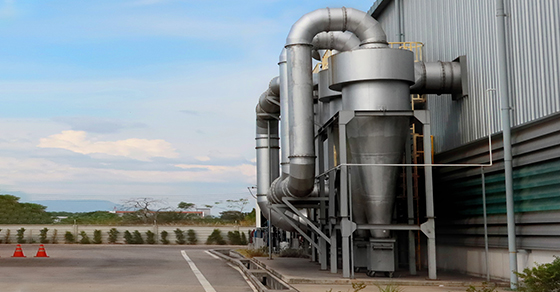
Fine dust cannot be easily contained. Over time, it can increase the risk of fires and equipment failure in factories. It settles on machinery and wafts into the air that workers breathe. Fortunately, there are systems in place to help control this risk at the source.
Industrial dust collection protects workers, equipment, and the finished product by capturing and removing harmful airborne particles before they pose a threat.
Small, medium, or large manufacturing companies situated in Northern Ontario, such as grain terminals or ore processing plants, need this system. It is essential for running a secure, safe business.
What is an industrial dust collector?
An industrial dust collector is a device that regulates air quality and improves worker safety in manufacturing facilities by capturing dust and airborne particles at the source. It captures and moves contaminated air through a system of hoods and ducts, separates particles, and either disposes of it outside or returns clean air to the facility.
The device comes in different sizes and configurations based on the size of the manufacturing facility, the type of airborne dust produced, and the amount of air to be treated.
A large system of industrial dust collection devices can serve an entire manufacturing or processing facility. In contrast, a single machine may only serve one or a few pieces of equipment in an entire shop. This is why choosing the right dust collector for a factory that deals with a lot of dust is important for worker and operational safety.
Common Types of Industrial Dust Collection Systems
Before choosing a dust collection device for a facility, factors like the type of waste, the amount of air to be treated, and the facility’s specific requirements influence which dust collection system is best. The following are the most popular kinds of industrial dust collectors:
- Cyclone separators: These dust collection devices spin dust-filled air using centrifugal force, pushing heavier particles into a collection hopper below. They are used mostly in factories that produce large amounts of wood waste. Most facilities use cyclone operators as an initial step before finer collection procedures.
- Baghouse collectors: This device collects contaminated air using long fabric filter bags. Baghouse collectors are mostly used in metalwork and mining and milling industries because they work excellently with fine dust and microscopic particles.
- Wet scrubbers: These collect and neutralize dust particles. They are also occasionally used to collect gases and vapours. Wet scrubbers are best for industries that deal with fine or flammable dust, where dry collection techniques are more dangerous.
- Cartridge collectors: These work using cylindrical, pleated filter cartridges to remove and separate dust from contaminated industrial air. They are ideal for industries with limited space because they use less equipment than a regular baghouse collector.
Sometimes, choosing the right dust collector means using more than one method. Some facilities need to pair a primary unit, like cyclone operators, with a secondary filtration unit, like baghouse collectors, to meet air quality targets.
How Dust Collection Systems Work
Most dust collection systems work similarly, although the exact components vary depending on the type of system. Below is a step-by-step description of how these devices typically work:
- Capture: This is the first step. Hoods (open fixtures that draw dust into the system) or enclosures (partial or complete barriers that contain dust at the source) are placed directly where dust is produced to stop contaminated air from spreading.
- Transport: A fan or blower then generates airflow to transport the contaminated air from the capture point to the collection unit through a network of hollow pipes called ductwork. To keep dust from building up inside the ductwork, the system requires adequate duct sizing and airflow velocity.
- Separate: Heavy or large debris is removed using a cyclone separator before reaching the main filters.
- Filter: In this stage, the device separates contaminated air and finer particles from the airstream using filter bags, filter cartridges, or wet scrubbers.
- Disposal: The collected particles are then dropped into a drum or storage bin for safe disposal and removal, and the filtered air is either returned into the building or disposed of outside.
A properly set up dust collection system can only work when well maintained. Frequent filter changes, ductwork checks, and airflow inspections keep your device functioning at high performance. It also helps facilities avoid the gradual dust buildup that often leads to expensive downtimes and accidents.
Why Dust Collection Systems Matter
Contaminated air is a general annoyance, not just for regular households. It poses a serious hazard to worker health, equipment lifespan, and legal compliance in manufacturing facilities.
This is particularly true across Northern Ontario’s industrial base. During crushing, screening, and material handling, mines and ore-processing operations produce large amounts of fine mineral dust that can easily lead to the problems listed above.
The same goes for agriculture. Combustible grain dust is a known explosion risk in agricultural-handling facilities and grain elevators if not handled properly.
Effective dust collection also enhances product quality in addition to safety and compliance. Hence, dust collection systems are necessary for workplace safety and output quality in manufacturing and processing environments because airborne particles can contaminate finished materials or interfere with sensitive equipment.
Nu-Tech Metals: Dust Collection Built for Northern Ontario Industry
Dust collection is only one piece of a larger picture that includes industrial HVAC and custom sheet metal fabrication for manufacturing enterprises, mills, and industrial sites in Thunder Bay and throughout Northern Ontario.
At Nu-Tech Metals, we supply dust collection systems, ductwork, and related sheet metal products designed to meet the needs of mining, milling, and grain processing businesses across the region.
Working with a provider who understands the reality of Northern Ontario industry makes it easier to keep your facility safe, compliant, and operational, whether you’re planning dust collection for a new production line or upgrading an old dust collector.
Speak to an expert at +1 807-798-1127 or contact us here today to get a specialized plan for your workspace.

