


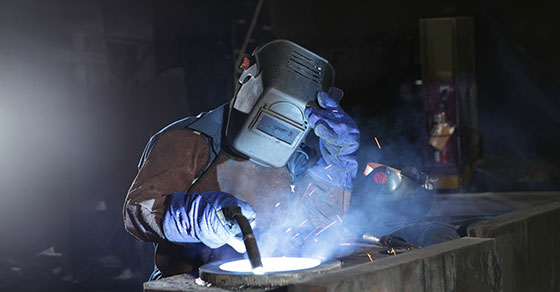
A failed weld on a conveyor frame can stop material movement across an entire production line within minutes. Damaged ductwork can reduce airflow inside a processing system long before the root cause is identified. Both theory and practice have proven that industrial facilities rarely have the flexibility to pause production for extended periods when multiple systems rely on continuous output.
A handful of operations now depend on faster on-site mobile welding. However, is it the best choice compared to full replacement? This blog talks about when welding services and full replacement are needed, alongside the best choice between on-site or off-site repairs in limiting production loss.
Is welding repair or full replacement the best option during industrial downtime?
Equipment damage does not automatically require full replacement. Maintenance teams tend to assess how urgently production must resume, the severity of the damage, and if the component can continue operating safely after repair.
For instance, a cracked support bracket may respond well to reinforcement work. In contrast, a severe distortion or repeated failure points may push a system toward replacement planning.
Time plays a deciding role. Removing large steel assemblies from conveyors, chutes, or material systems introduces additional steps beyond the repair itself. Cranes, disassembly work, transport coordination, and reinstallation plans can extend downtime beyond initial expectations.
Many facilities restore safe operation through welding services first and schedule larger replacements during planned shutdowns.
On-Site vs. Off-Site Welding Services: What Changes Operationally?
The repair strategy influences more than the damaged component. Scheduling pressure, labour coordination, equipment access, and production continuity all shift based on the repair method selected.
- With on-site mobile welding, repair crews travel directly to the facility and complete the work at the equipment location. This approach supports reinforcement of damaged support, repair of structural steel sections, and correction of worn ducting or mechanical attachments. All this is done without removing large system components.
- Off-site welding follows a different process. Damaged components are removed, transported to a fabrication workshop, repaired or rebuilt under controlled conditions, and then returned for reinstallation. This method aids major rebuilds and extensive modifications that require full access to equipment. Other steps, like dismantling, transport scheduling, and reassembly, can extend downtime depending on project scale.
Both methods remain valid within industrial welding approaches. Selection is always based on repair complexity, urgency, equipment size, and operational constraints.
How On-Site Mobile Welding Limits Industrial Downtime
Downtime reduction simply depends on the following drivers:
- How fast damage is stabilized.
- How little disruption spreads through connected systems.
- How efficiently repair work integrates into ongoing operations.
On-site repair support addresses these factors through quick responses, limited handling, and direct access to damaged structures.
1. Faster response during unexpected equipment failures
Production interruptions rarely follow planned schedules. A structural failure during active operation can affect conveyors, material flow systems, or processing lines within a short period.
Field crews providing mobile welding arrive directly at the affected system and begin stabilization. The early intervention limits the spread of structural stress and lowers the risk of secondary failures forming across connected components.
2. Less equipment removal and transport delays
Large industrial equipment is usually integrated tightly into surrounding systems. Conveyors, ducting networks, structural support, and processing assemblies need real effort to remove safely.
On-site welding services eliminate much of the dismantling process through quick repair capability at the equipment location. Transport coordination, crane scheduling, and off-site logistics become unnecessary. Additionally, reduced handling preserves production schedules and prevents additional downtime created by equipment removal steps.
3. Repairs can be completed around existing maintenance schedules
It is important to know that not all repair services can be done during emergencies. Routine inspections and planned shutdowns usually unveil early structural issues.
Industrial welding performed on-site helps maintenance teams complete repairs within the existing shutdown window. For example, reinforcement welds, crack repair, and structural correction can be completed alongside other scheduled maintenance tasks. This strategy avoids a separate closedown period solely for welding services.
4. Structural problems are addressed before failure spreads
Small defects can develop into larger failures when exposed to continuous vibrations, load stress, and environmental exposure. Cracks around supports, fatigue near weld joints, and wear around structural connections can expand gradually under operating conditions. Field-based mobile welding allows early fixes before damage spreads. Early-stage repairs also halt the likelihood of secondary failures that could form in connected systems.
Nu-Tech Metals Provides Reliable and Urgent On-Site Welding Repairs
In most cases, industrial repair situations need immediate action, precise coordination, and consistent workmanship under active operational conditions. Nu-Tech Metals Ltd. has the commitment and expertise to support facilities requiring reliable field repair without extended downtime.
Based in Thunder Bay, our team of specialists works with industrial operations across Eastern and Western Canada. We support mines, mills, grain elevators, manufacturing factories, and processing plants. Each on-site mobile welding visit can cover structural steel, dust collection, industrial HVAC, sheet metal components, and all related industrial systems.
All that is needed is a call. We respond to urgent repair requests and dedicate all necessary effort and craftsmanship to restore operational stability. All complex fabrication work, large repairs, and difficult field conditions form part of our regular scope of work.
Talk to the Nu-Tech Metals mobile welding team today at +1 807-798-1127, or reach out online to discuss your needs and explore available on-site support to improve industrial uptime and continuity.
Frequently Asked Questions
-
What information should be provided before requesting a mobile welding service?
A detailed description is needed of the damaged component, its on-site location, and what part is connected to it (for example, conveyor, ducting, or structural frame). Also, other information, such as whether the system is operational or shut down, can help. When available, pictures or a short video of the damage help crews understand the access conditions and determine the right tools to bring on the first visit.
-
Can mobile welding work be carried out during active production?
In some situations, yes. However, it depends heavily on safety conditions and how close the repair area is to moving equipment or active material flow. If the damaged section can be safely isolated, crews may complete reinforcement or repair work while the surrounding systems continue running. There are cases where a partial shutdown is done to stop heat exposure, vibration interference, or risk to nearby operations.
-
What environmental conditions can affect on-site welding work?
Field welding conditions vary widely based on the site. Strong winds can affect shielding during welding, thus necessitating temporary barriers. Extreme cold may require additional preparation time for materials and equipment to perform. Moisture or wet surfaces must be managed carefully to ensure proper weld quality. Also, tight or confined access areas can influence setup and positioning. Nu-Tech Metals’ mobile welding team always adjusts methods on-site to achieve structural strength and suitable load conditions after completion.

