


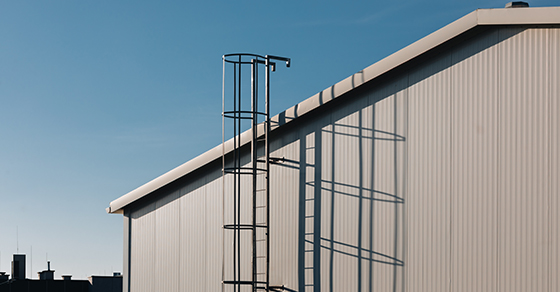
Winter can turn even the most familiar industrial spaces into unpredictable hazards. Frost glints on metal catwalks, and ice forms silently on ladder rungs. What looks safe can become treacherous in an instant.
This is exactly why elevated surfaces demand constant vigilance. Staying aware and prepared is the best way to protect workers and maintain operations. In this guide, we explain why winter is uniquely risky for catwalks and ladders. It also contains practical industrial safety insights to prevent slips and reduce downtime.
Why Winter Escalates Risks on Elevated Access Systems
Winter changes metal catwalks and ladders in ways that many teams underestimate. For instance:
- Cold air pulls heat from steel fast, which turns solid surfaces rigid.
- Snow settles into grated platforms and fills open patterns that normally help with drainage.
- Frost spreads across railings and steps before crews arrive on site. Wind drives snow sideways, packing into corners and coating handrails from unexpected angles.
These conditions create daily challenges for industrial safety long before slips even occur. Slow movement, reduced stability, and increased time spent on simple tasks become the norm.
The Science of Slips: How Ice Forms on Catwalks and Ladders
To understand falls and workplace safety, you must understand ice. Most people do not know that a metal surface reacts to temperature changes faster than concrete or wood.
When warm air meets cold steel, moisture in the air condenses instantly and forms a thin film. This film freezes into micro-ice, a transparent layer that removes almost all traction.
As temperatures rise during the day, that thin layer melts again. When it freezes overnight, it grows thicker and bonds tightly to the metal. Graded platforms collect moisture along every edge, thus creating hundreds of tiny freezing points.
Ladder rungs freeze faster because their narrow shape exposes more surface area to the cold. Metal also pulls heat from a boot sole the moment a worker steps on it. This makes the surface more slippery.
These simple physical reactions turn normal steps into serious workspace safety risks when ice builds in layers.
Below are the specific ways to prevent icy slips and associated downtimes:
1. Identify high-risk zones and common oversights
In industries like mining, power generation, and processing plants, winter exposes very clear high-risk zones on catwalks and ladders.
- Ladder bases freeze first. This is because snow from boots melts, spreads, and turns into hard ice.
- Platform transitions also rank high. Small steps trap snow at the edges, and the freeze-thaw cycle creates uneven patches.
- Shadowed walkways stay cold all day, so frost forms faster and lasts longer. Wind-exposed catwalks collect drifting snow inside the grating, which creates compact ice that hides inside the surface.
There are also common oversights. Many teams underestimate how fast thin ice forms on metal. They also overlook the narrow areas between handrails and guardrails, where snow packs tightly.
Another common oversight is vibration. Equipment below a catwalk shakes loose small ice fragments that spread across the walkway. These problems weaken industrial safety and increase downtime risk.
2. Use winter-safe catwalks and ladders
One of the most effective ways to prevent winter slips and downtime is the installation of winter-safe catwalks and ladders.
Winter-safe catwalks are built with anti-slip grating that keeps boots steady even when frost or thin ice forms. Their steep slopes and built-in drainage channels work together to move snow and water off the walking surfaces, preventing hidden ice patches.
Guardrails, midrails, and toe boards are strategically placed to guide movements and provide reliable fall protection. Walkway widths are carefully measured to allow safe passage for both personnel and equipment.
Ladders are designed with similar winter-focused principles. Textured rungs and proper spacing ensure each step has a firm footing. Handrails guide every movement, while the materials resist frost buildup and maintain grip in freezing temperatures.
The combination of these design elements greatly reduces the chance of slips in elevated access points.
3. Surface treatments and materials for ice prevention
After designing winter-safe catwalks and ladders, surface treatments and material choices become the next step.
Anti-ice coatings reduce frost buildup and make surfaces easier to clear. Serrated grating and textured rungs create traction when thin layers of ice form.
Powder-coated steel resists moisture absorption and prevents ice from bonding tightly. Some treatments also combine rough textures with water-repellent coatings to improve grip in freezing conditions.
Together, these winter-ready measures directly support industrial safety. Workers can move with confidence. Handrails and guardrails work as intended. The risk of falls drops significantly.
4. Prioritize routine maintenance for industrial safety
Even the best-designed winter-safe catwalks and ladders need consistent attention to keep workers safe. Regular inspections catch early frost buildup, worn grating, and loose handrails. Blocked drainage is also spotted before it creates hazards.
De-icing schedules should align with local weather patterns to prevent ice accumulation. Cleaning removes snow, dirt, and debris that trap moisture, thus aiding reliable fall protection.
Employee behaviour also plays an important role. Staff who follow proper climbing, walking, and reporting protocols mitigate risks. The use of correct footwear adds an extra layer of workplace safety.
When these maintenance routines are applied, elevated points stay reliable, slips are minimized, and downtime drops.
How Nu-Tech Metals Builds Winter-Resilient Industrial Catwalks and Ladders
Nu-Tech Metals designs and fabricates industrial catwalks and ladders that remain functional even in harsh winter conditions.
Every surface is engineered with anti-slip grating, proper slope, and drainage-friendly features. Handrails and guardrails are properly blended for fall protection. These design choices reduce ice buildup, eliminate slips, and keep operations moving without downtime.
Since 1993, industries in Ontario and across Canada have trusted us for durable custom metal fabrication. Our Thunder Bay facility handles all steps, from cutting and bending to welding and assembly. We also have a mobile crew that extends our capabilities to remote sites.
Talk to us today at +1 807-798-1127 or reach out online to book a consultation, request a quote, or discuss your project with our engineering team.

