


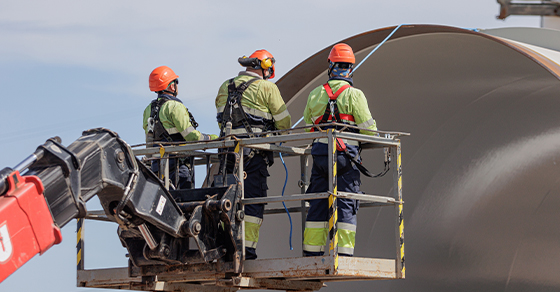
Manufacturing facilities are intended to move because people, materials, and equipment are constantly in motion. Workers climb, reach, inspect, adjust, and repair, usually at height and while production continues around them. These elevated tasks are rarely optional, and they are rarely performed once.
Over time, how workers access these areas directly affects safety, efficiency, and downtime. The question many operations teams face is not whether elevated access is needed. Instead, it focuses on how these systems can be integrated into daily workflows without slowing production or introducing new risks.
This article looks at how custom safety platforms function in real manufacturing settings. It also touches on why they are built the way they are and how they support daily operations beyond surface-level safety considerations.
Why Safety Platforms Exist Beyond Compliance
On paper, elevated access systems are often discussed in terms of regulations. On the floor, their value manifests in more practical ways. Safety platforms create predictable, stable working areas that reduce hesitation and improvised movement.
For example, when a worker knows exactly where to stand and how to move, tasks such as inspections or adjustments happen faster and with fewer interruptions.
Fall protection is a key part of this equation, but its impact extends beyond preventing incidents. Properly constructed platforms reduce fatigue, limit awkward reaching, and allow workers to maintain focus on the equipment rather than on the footing.
Gradually, this consistency supports smoother workflows, fewer stoppages, and better coordination between maintenance and production teams. In busy facilities, these small efficiencies add up quickly.
What Makes a Platform “Custom” in Manufacturing Environments
The difference between standard and custom-built solutions becomes clear once real layouts are considered. Manufacturing floors are shaped by existing machinery, overhead systems, and fixed process lines, leaving little room for generic builds.
How Facility Layout Shapes Platform Customization
In practice, the platform must work around equipment rather than replace it. Clearance issues, uneven floor elevation, and proximity to moving components all influence dimensions and placement. A custom approach ensures that access points align with actual work areas, rather than forcing workers to lean or stretch.
Why One-Size-Fits-All Often Falls Short
Off-the-shelf systems assume ideal spacing and static use. In contrast, custom safety platforms are planned around how people move during a shift. This entails where tools are carried, where pauses occur, and where repeated tasks happen. Within industrial platforms, this level of adjustment allows platforms to support work without disrupting surrounding operations or material flow.
Where Custom Safety Platforms Are Commonly Used
Custom safety platforms appear in more locations than many facilities initially expect, especially once routine tasks are mapped out.
- Equipment servicing and inspection areas: Maintenance teams often need stable access to motors, conveyors, or processing units for checks and adjustments. Custom safety platforms placed directly at service points lower setup time and allow work to proceed without temporary ladders or lifts.
- Elevated controls and monitoring points: Control panels positioned above floor level benefit from platforms that allow operators to stand comfortably while maintaining visibility of the process below.
- Production lines: On active production lines, certain tasks require workers to repeatedly access the same elevated positions. This is done to check alignments, clear minor obstructions, or monitor equipment performance. When these tasks are performed across multiple shifts, even small shortcomings become safety risks or productivity drains.
Custom safety platforms positioned alongside the line help workers step in and out of these tasks easily without relying on temporary access methods or a production pause.
- Material transfer points: At material transfer points, visibility and stability are critical. Workers may need to observe product flow, confirm transfer rates, or intervene quickly if materials bridge or back up. Maintenance access in these areas must provide clear sightlines and secure footing. Well-placed custom industrial platforms make it possible to perform these checks without bottlenecks elsewhere on the line.
Customized for Real Workflows, Not Ideal Conditions
Certain conceptual assumptions are bound to break down quickly in live environments. Workers carry tools, wear protective gear, and move with urgency to mostly shift around tight spaces.
Accounting for Movement, Tools, and Protective Equipment
Platforms must allow safe turning, stepping, and positioning while hands are occupied. Guardrails, toeboards, and walking surfaces should accommodate bulkier clothing and protective equipment without reducing usable space.
Visibility, Reach, and Repetition
Repeated tasks magnify poor choices made in the planning stages. When distances are too long or visibility is blocked, workers compensate in unsafe ways. Effective maintenance access shortens reach zones and keeps sightlines clear. Its integrated fall protection supports steady, confident movement throughout a shift.
Materials, Durability, and Long-Term Use Considerations
It is important to know that manufacturing environments are demanding on structures. For instance, vibration from machinery can loosen poorly planned assemblies. Additionally, moisture, chemicals, or heat can degrade unsuitable materials.
Custom industrial platforms built for long-term use consider these conditions upfront. Material selections affect strength, alongside maintenance needs and lifespan.
Lower-cost options may appear attractive initially, but durable construction is guaranteed to minimize repairs and downtime. It is essentially a practical investment over the life of the facility.
Installation, Integration, and Minimizing Downtime
Most facility managers and operators fail to realize that timing and coordination play an important role in successful implementation. Installation usually occurs while facilities remain operational, thus making sequencing key.
Custom safety platforms that are fabricated to precise measurements integrate better during installation. It lowers the need for on-site adjustments. Proper alignment with existing structures helps prevent future usability issues.
When installation is planned around production schedules, facilities avoid extended shutdowns and ensure platforms perform as intended from day one.
Custom Safety Platforms Built for Demanding Manufacturing Environments
At Nu-Tech Metals, we have built a reputation for dependable fabrication across Ontario and throughout Canada. We produce custom safety platforms constructed around real manufacturing conditions, with a direct focus on quality, fit, and long-term reliability.
Fabrication is performed in steel, galvanized steel, stainless steel, aluminum, copper, and brass. Each material is handled precisely and without shortcuts. Our commitment concentrates on clean builds and practical layouts that support efficient maintenance access without operational issues.
Whether it is a prototype or a full run, our fabrication specialists can be relied on. To discuss a project, request a quote, or book a consultation, reach out at +1 807-798-1127 or contact Nu-Tech Metals online.

